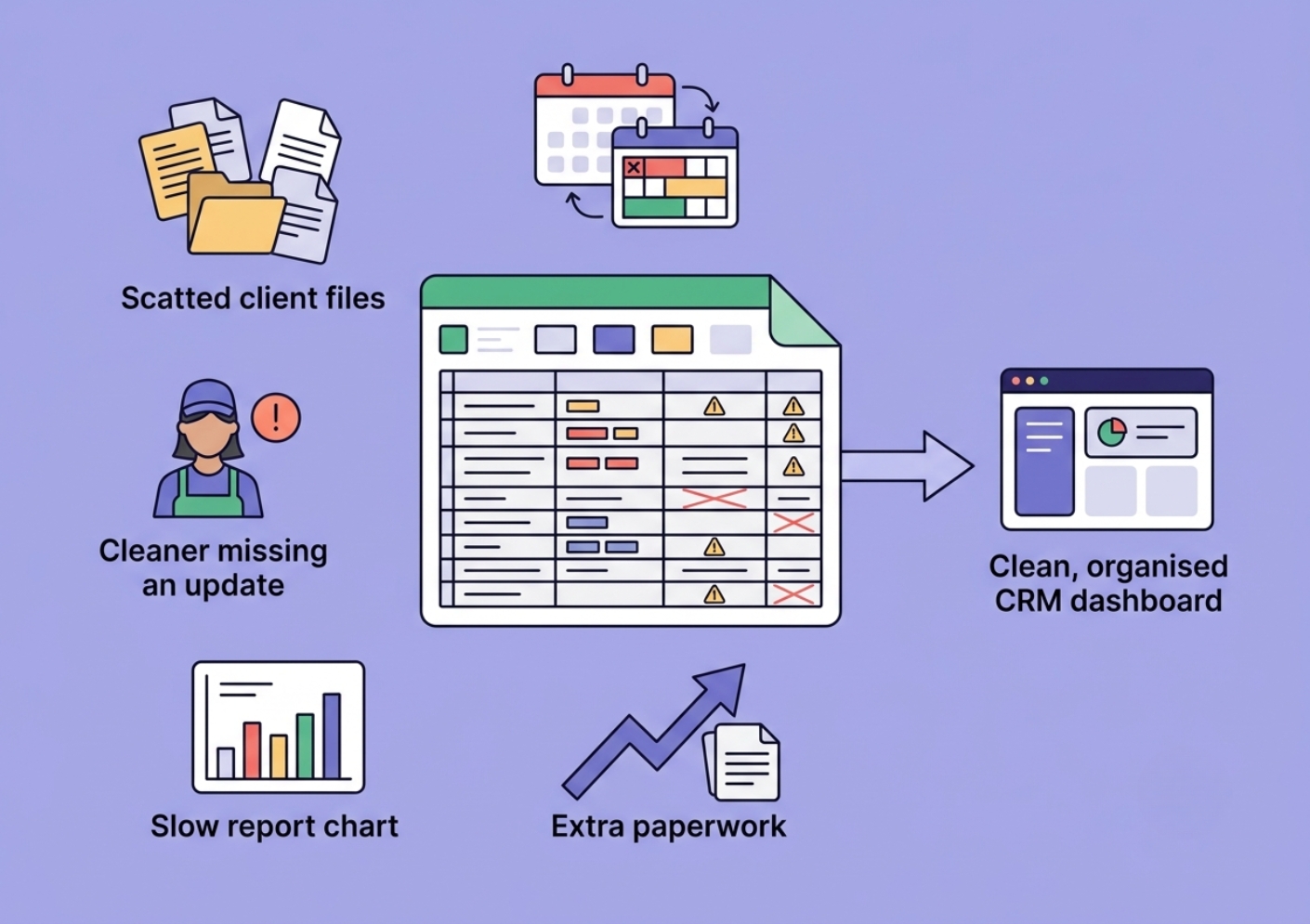

Cleaning teams often work across different properties, clients, and service types. When important instructions are passed through calls, paper notes, or separate messages, details can easily be missed.
Digital job notes give cleaners and managers one reliable place to record information. Used properly, they can improve consistency, reduce confusion, and help every visit meet the agreed standard.
Record Essential Property Details
Each job record should contain the information a cleaner needs before arriving. This may include the address, access instructions, alarm details, parking guidance, service type, and expected duration.
Property notes can also identify delicate surfaces, restricted rooms, pets, preferred products, or equipment stored on site. Keeping these details together prevents staff from searching through old messages.
Only authorised team members should be able to view sensitive client information.
Capture Client Preferences
Clients may request particular tasks, products, or working methods. Some may prefer certain rooms to receive extra attention, while others may ask cleaners to avoid specific items.
Recording these preferences helps different team members provide a consistent service. It also reduces the need for clients to repeat instructions whenever another cleaner attends.
Notes should be clear, factual, and updated whenever the client changes their requirements.
Track Work Completed
Digital job notes can show which tasks were completed during each visit. Cleaners may tick checklist items, add brief comments, or upload photographs where appropriate and authorised.
This creates a useful service history and helps managers confirm that agreed work has been carried out. It can also support quality checks and follow-up conversations.
Your Gaff Cleaning provides templates, custom modules, and workflow guidance that can help businesses structure job records around their actual services.
Report Problems Quickly
Cleaners may discover damage, missing supplies, access difficulties, safety concerns, or tasks that require additional time. These issues should be recorded promptly rather than remembered until later.
A clear note allows the office team to contact the client, arrange a return visit, update the quotation, or assign specialist support.
Photographs may help explain the issue, but businesses should have clear rules covering consent, storage, and access.
Keep Notes Useful
Job notes should be detailed enough to guide the team without becoming difficult to read. Use consistent headings, short sentences, and agreed terms.
Avoid personal opinions, unnecessary comments, or unclear abbreviations. Review older notes regularly and remove information that is no longer relevant.
Your Gaff Cleaning can assess existing CRM processes and provide user training to help teams record information correctly and confidently.
Build Better Service Records
Digital notes are most effective when they form part of the normal workflow. Decide when staff should read them, what must be recorded, and who is responsible for updates.
Managers should check that records remain accurate and that important issues receive follow-up action.
A well-organised job history gives every cleaner better information before arriving. It also helps the business maintain standards, respond to problems, and provide a more dependable experience across recurring and one-off services.