Pets bring companionship and comfort, but they can also add hair, mud, odours, and extra dust to the home.
The safest approach is to use suitable products, clean high-use areas consistently, and avoid methods that may irritate animals or damage surfaces.
Manage Pet Hair Regularly
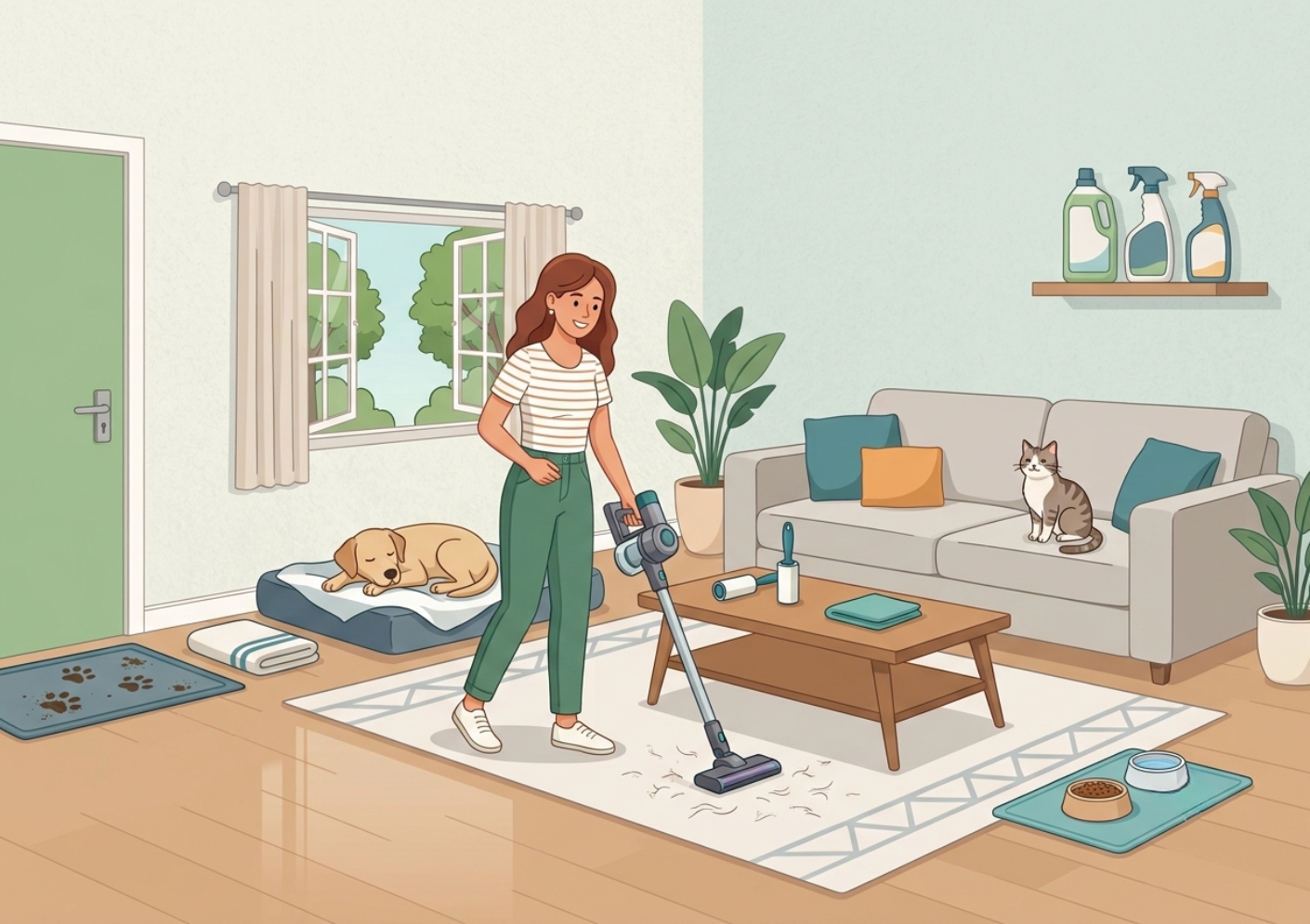
Pet hair is easier to control when it is removed before it spreads across several rooms. Vacuum carpets, rugs, sofas, stairs, and pet bedding using suitable attachments.
A rubber brush, lint roller, or damp microfibre cloth can help lift hair from upholstery and fabric surfaces. Always test the method on a small hidden area first.
Brushing pets regularly may also reduce loose hair, although grooming needs will depend on the animal and breed.
Deal With Mud Quickly
Place washable mats near entrances used by pets and keep a towel nearby for wet paws. Removing mud before animals move through the property can prevent marks from spreading.
Allow thick mud to dry slightly before vacuuming or lifting it, as rubbing wet soil into carpet may make the stain worse.
For hard floors, wipe the area using a product suitable for the surface and dry it afterward to prevent slipping.
Control Unpleasant Odours
Pet odours often collect in bedding, rugs, carpets, soft furniture, litter areas, and poorly ventilated rooms. Wash removable covers and pet bedding according to their care instructions.
Vacuum fabrics before applying any suitable deodorising treatment. Avoid covering odours with strong fragrances because this may only hide the problem temporarily.
Open windows when appropriate and clean litter trays, cages, bowls, and feeding areas regularly.
Choose Products Carefully
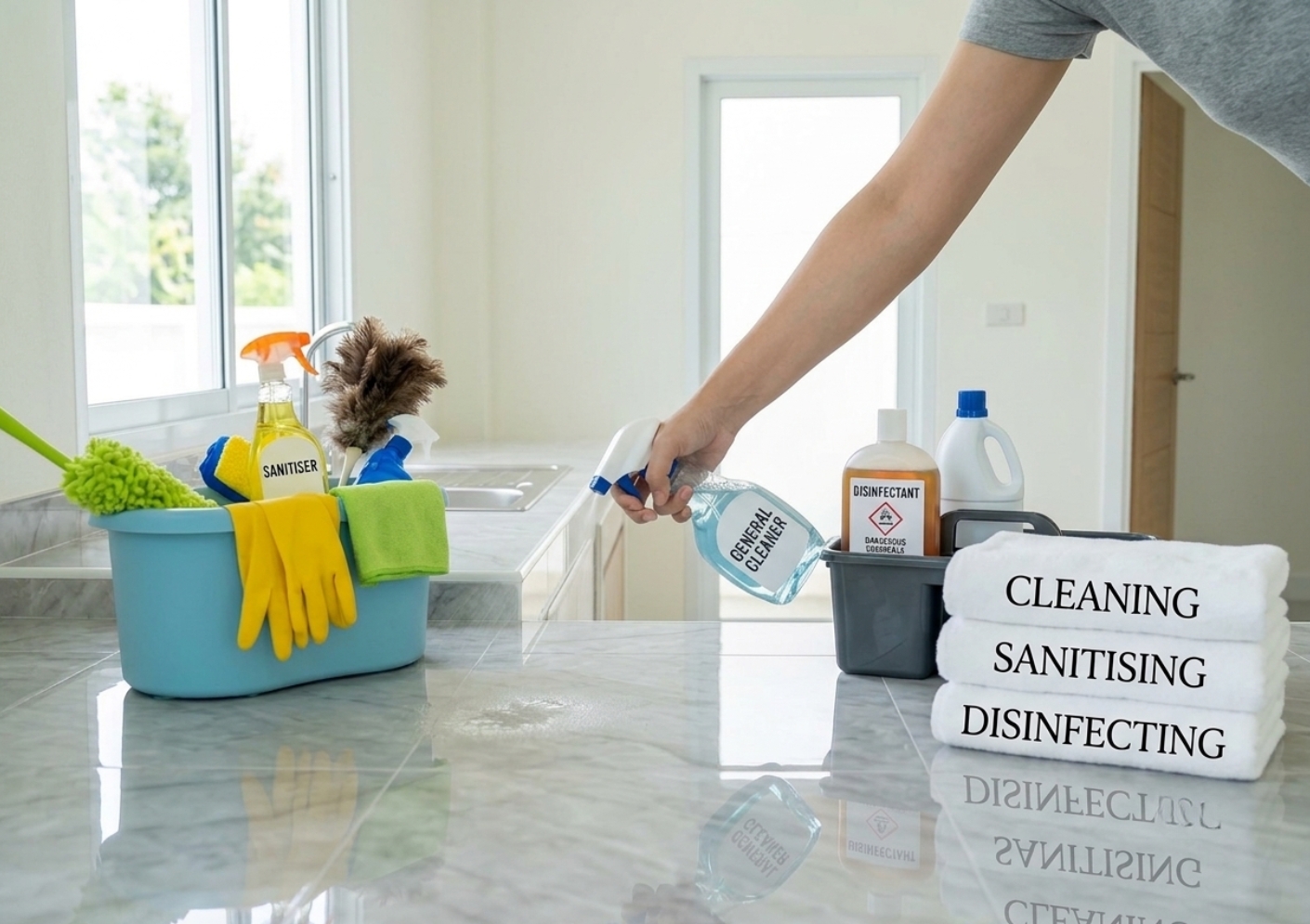
Not every household cleaner is suitable for use around animals. Some products may irritate paws, skin, eyes, or breathing, particularly when used in enclosed spaces.
Read labels carefully and follow all safety instructions. Keep pets away from wet floors and recently treated surfaces until they are fully dry.
Never allow animals to lick cleaning products, buckets, cloths, or treated areas. Store chemicals securely and out of reach.
Clean Feeding Areas
Food and water bowls can collect residue, hair, and bacteria. Wash them regularly using a suitable method and clean the floor or mat underneath.
Wipe nearby walls, cupboard fronts, and skirting boards if food or water is splashed. Replace damaged bowls that are difficult to clean properly.
Also check storage containers and scoops used for pet food, as crumbs and oils can build up over time.
Keep a Simple Routine
Focus on the places your pet uses most often. Vacuum high-traffic areas, wash bedding, clean feeding spaces, and deal with accidents immediately.
Use separate cloths or tools for litter areas, feeding zones, and ordinary household surfaces. Wash your hands after handling waste or cleaning pet equipment.
A consistent routine will usually be more effective than waiting for hair, mud, and odours to become difficult. By cleaning small areas regularly and choosing pet-safe methods, you can keep the home comfortable overall without creating unnecessary risks for your animals.