Reliable service depends on more than completing a checklist. Cleaning businesses also need a clear way to inspect work, record problems, respond to feedback, and prevent the same issue from happening again.
A quality-control process helps managers protect standards without making staff feel constantly monitored. It should support better work, clearer communication, and consistent client experiences.
Set Clear Service Standards
Quality control begins with a clear definition of what good work looks like. Create service standards for each job type, including domestic cleaning, office visits, deep cleans, and specialist work.
List the essential tasks, expected finish, approved products, and any areas requiring extra care. Staff should understand these standards before attending a property.
Your Gaff Cleaning provides templates, guides, and workflow support that can help businesses document service expectations in a practical format.
Use Routine Inspections
Inspections should take place regularly, but they do not need to follow every visit. Managers can review selected jobs, new staff, specialist services, or properties where concerns have been raised.
Use a short inspection form covering important areas. Record what meets the standard, what needs attention, and whether follow-up action is required. Also, keep the process consistent so every cleaner is assessed fairly.
Collect Useful Client Feedback
Client feedback can reveal issues that may not appear during an inspection. Ask focused questions about punctuality, communication, completed tasks, and the overall result.
Avoid sending long surveys after every appointment. A simple rating and short comment box may produce more useful responses.
Record recurring concerns in the client or job history so managers can identify patterns rather than treating each complaint as an isolated event.
Respond to Problems Properly
When a service falls below the expected standard, respond quickly. Confirm the concern, review the job record, and decide whether a return visit, explanation, refund, or other action is appropriate.
The purpose is not only to correct the problem. Managers should also identify why it happened. The cause may involve unclear instructions, limited time, missing supplies, poor training, or incorrect scheduling.
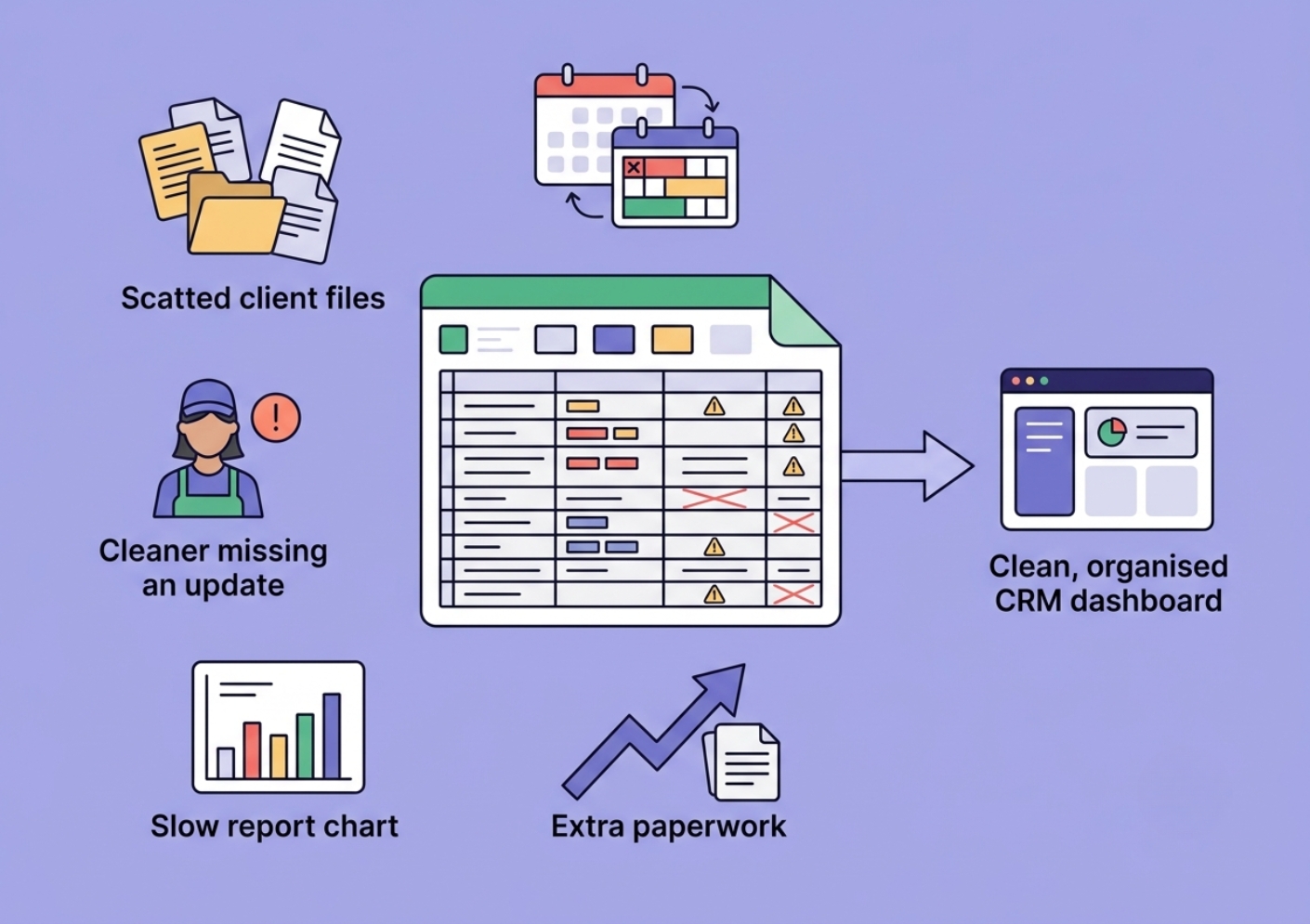
Your Gaff Cleaning can help businesses connect quality checks, job notes, client feedback, and reporting through tailored CRM workflows.
Support Staff Improvement
Quality control should help staff improve rather than create fear. Discuss concerns privately, explain the expected standard, and provide coaching where needed.
Recognise strong work as well. Positive feedback can reinforce good habits and show teams that inspections are balanced.
If several cleaners make the same mistake, review the process or training before assuming the problem is individual performance.
Review the Results
Track inspection outcomes, complaints, repeat visits, and common service issues over time. This information can show where standards, training, scheduling, or client communication need improvement.
Review the process regularly and remove steps that do not provide useful information.
A strong quality-control system combines clear standards, fair inspections, client feedback, and corrective action. When these elements are managed consistently, cleaning businesses can improve service quality, support staff development, and build lasting trust with clients.